
Building governance for
AI-enabled fossil fuel expansion
AI is helping oil and gas companies find, produce, and deliver more fossil fuels, sustaining the economic viability of the fossil fuel industry and undermining global transition efforts.

Enabled emissions are the additional greenhouse gases released when advanced technologies (AI, IoT, and high-performance/cloud computing) make fossil fuel production economically viable.
By extending the life of existing fields and shale basins, AI helps lock in the infrastructure and investment that keep emissions high for decades.
Beyond datacenters: the distinction
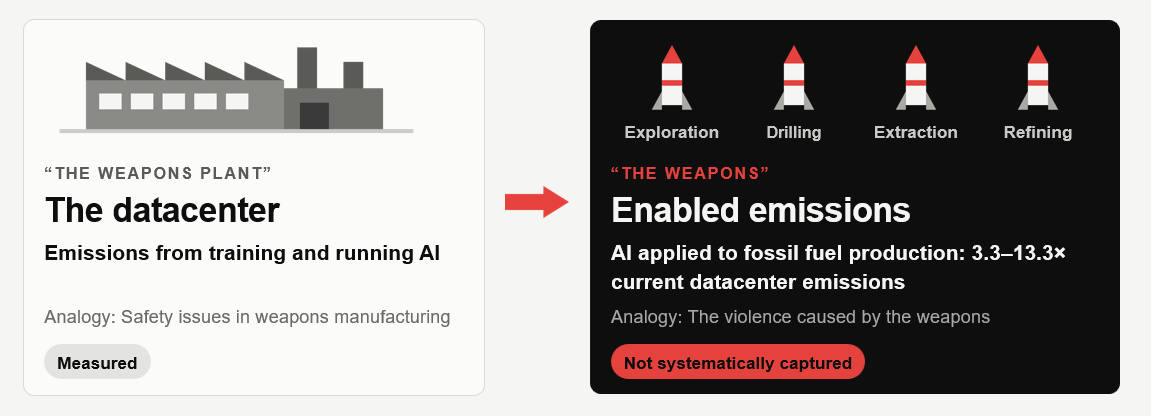
Addressing the plant does not address what it produces.
A safer weapons plant does not reduce the violence from the weapons; cleaner datacenters do not reduce the emissions of AI for fossil fuel production.
PEER-REVIEWED RESEARCH
npj Climate Action · Nature Portfolio journal · August 2026
AI's fossil fuel applications enable more emissions than its renewables applications avoid.
Conventional assessments of AI's climate impact focus on datacenter energy demand, AI-optimized renewables, and demand-side efficiency, but largely omit AI's effect on the economics of fossil fuel supply. This study models that pathway alongside the others in a single global energy–economy framework, quantifying both the emissions enabled by fossil fuel productivity gains and the emissions avoided by renewables productivity gains.
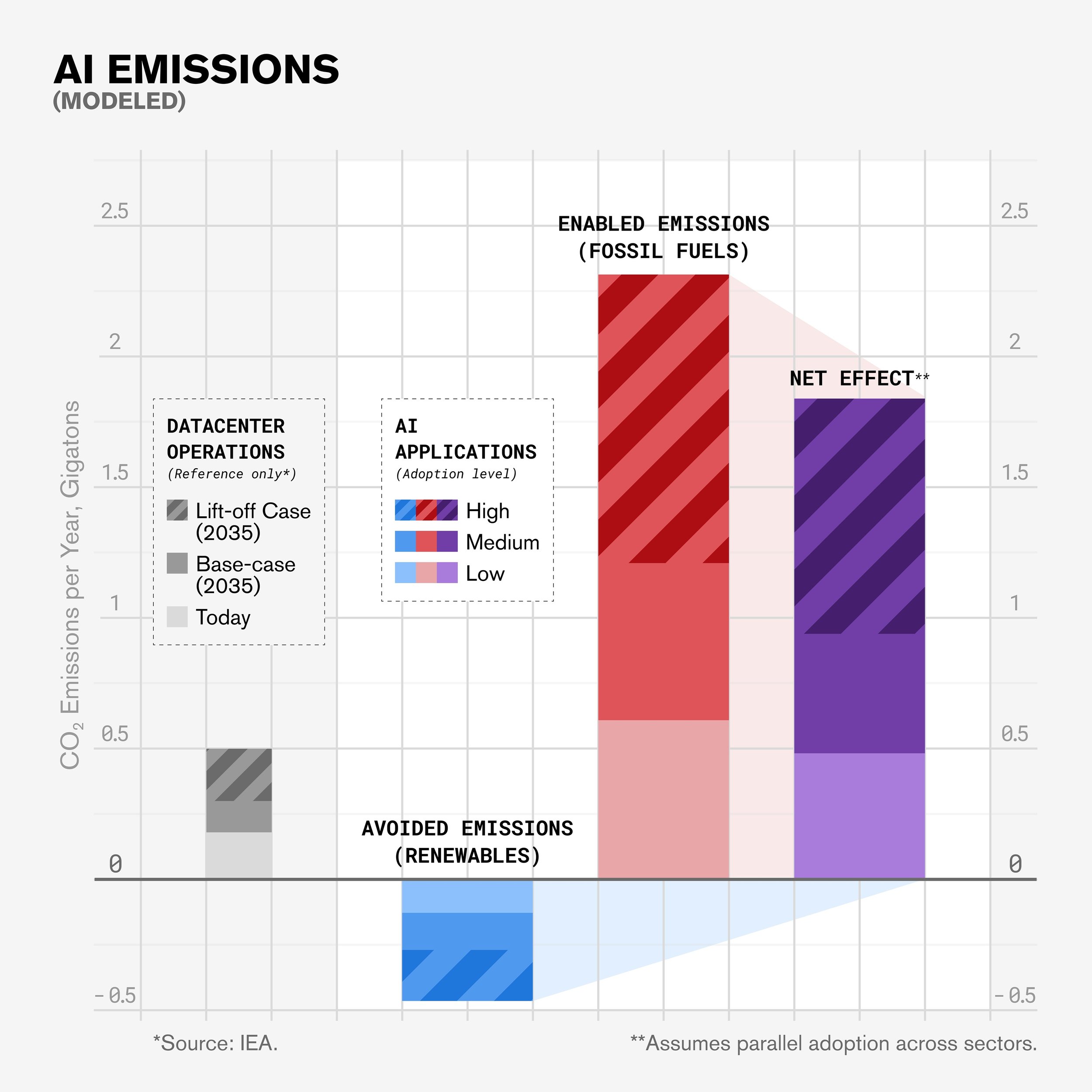
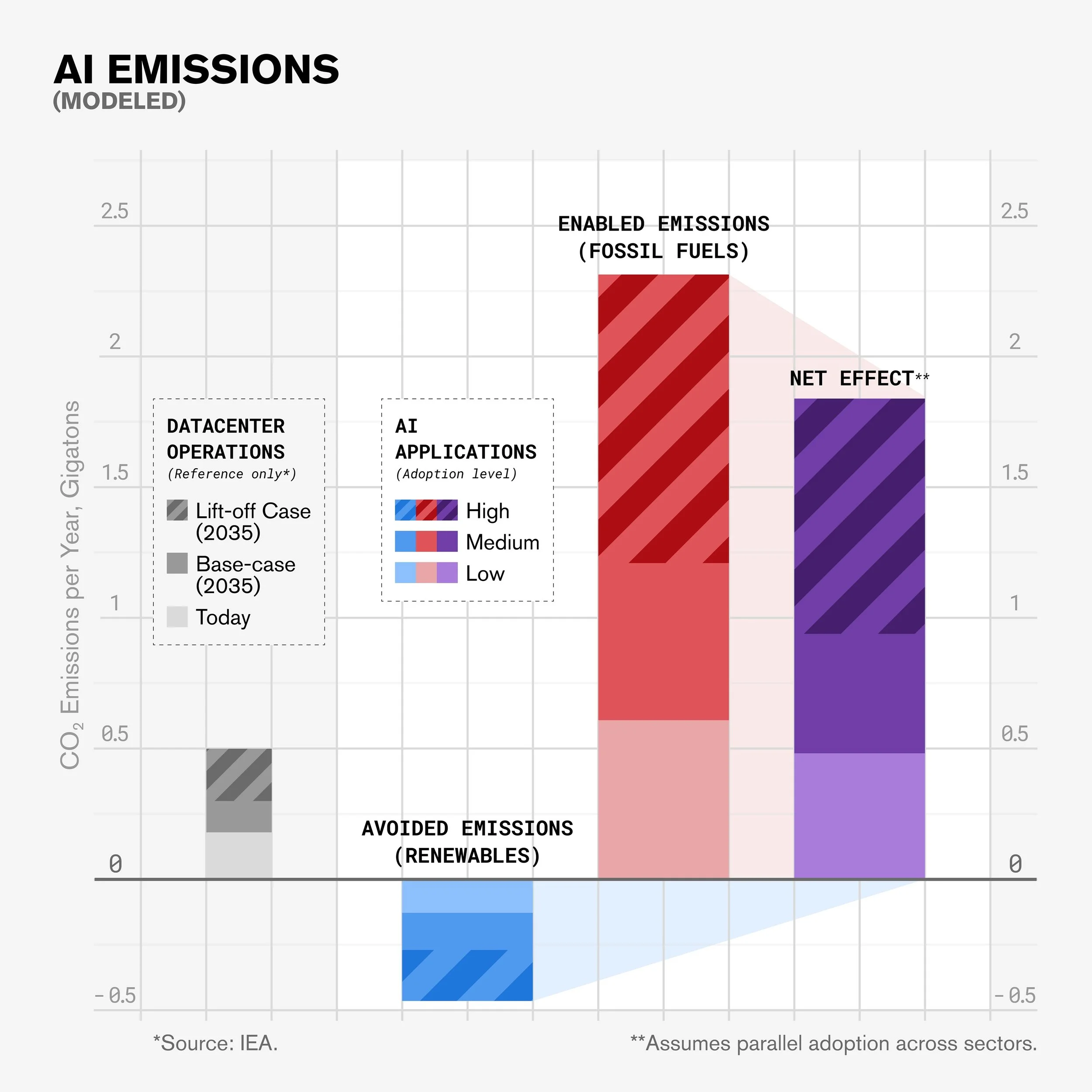
Modeled annual CO₂ emissions from AI by adoption level. Datacenter operations shown for reference only (source: IEA). Net effect assumes parallel adoption across sectors. From Alpine et al., npj Climate Action, 2026.
0.47–1.8 Gt
Net increase in global CO₂ emissions each year – 1.2–4.8% of 2024 energy-related emissions.
3.3–13.3×
Times larger the emissions enabled by AI's fossil fuel applications are than current datacenter emissions.
4–5×
How much larger AI's renewables gains must be than its fossil fuel gains just to break even.
Authors: Will Alpine, Nathan Geldner, Holly Alpine, and Maksym G. Chepeliev (Purdue University).
COVERED IN
Financial Times Wall Street Journal The Guardian Wired Axios Fast Company HEATED Climate Change News DeSmog Sierra Inside Climate News
AI is reshaping the economics of fossil fuel supply
Across exploration, extraction, refining, and logistics, AI applications are lowering costs and sustaining the economic viability of otherwise marginal resources.
-
![Slide showing the logo of the International Energy Agency with the title 'Digitalization & Energy' on a dark blue background.]()
Digital technologies can increase technically recoverable oil and gas resources by around 5% globally.
-
![]()
AI-powered analysis identifies 470 billion to over 1 trillion additional barrels of recoverable oil in existing fields
-
![]()
Goldman Sachs: AI could cut the cost of a new shale well by ~30% and lift recoverable U.S. shale reserves by 8–20% — equivalent to 10–30 billion additional barrels
-
![]()
In the Permian, AI helped push break-even oil prices from over $90/barrel in 2012 to roughly $40 today
-
![]()
At CERAWeek 2025, oil majors reported AI is enabling faster drilling and broader resource access: BP cut seismic analysis timelines by up to ~85%; Devon Energy reports a 25% improvement in well productive life
-
![]()
AI holds potential to extend the shale era
-
![]()
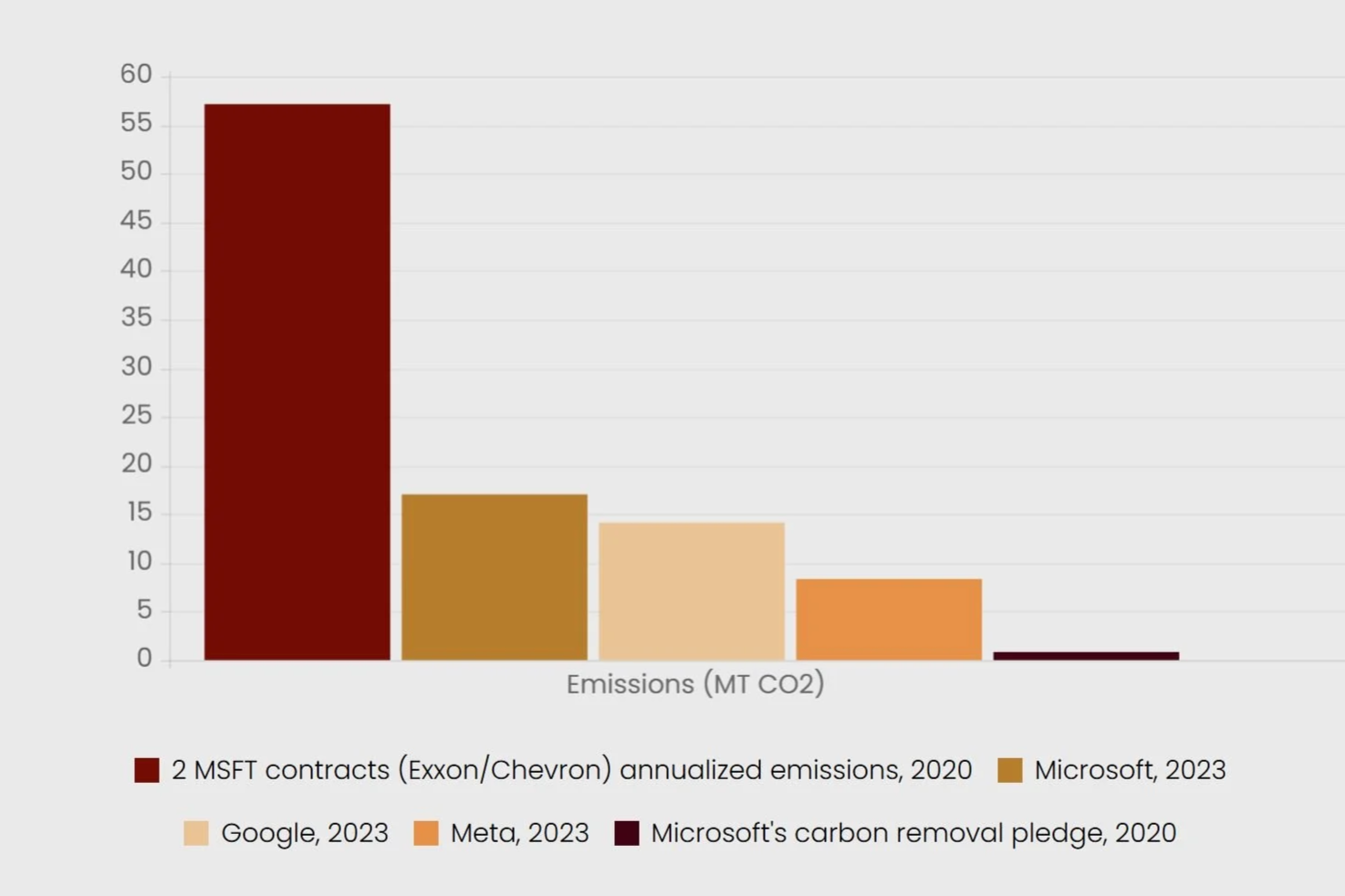
A single Microsoft–Exxon Permian contract may enable ~3.4 million tonnes of additional CO₂ annually
-
![Nighttime city skyline with tall buildings illuminated, featuring light trails creating a blurred, streaked effect from camera movement.]()
Global AI software spending in the oil and gas market is forecast to increase 24.3% in 2024 to $1.5 billion and reach $2.9 billion by 2027
-
![An industrial oil refinery at night with tall smokestacks illuminated against a dark sky.]()
Big Tech Helps Big Oil Pump More, Belying Climate Pledges by helping prolong the fossil-fuel age.
-
![Close-up of a computer screen displaying code in a dark-themed code editor with colorful syntax highlighting.]()
Azure's AI services are automating drilling, optimizing reservoir simulation, and — with OpenAI integration — opening new frontiers in fossil fuel exploration and production
-
![Industrial pipes and metal framework with a pink-colored pipe on a clear sky background.]()
A Microsoft engineer sent to Kazakhstan to help boost Tengiz field output from 600,000 to 1 million barrels per day.
-
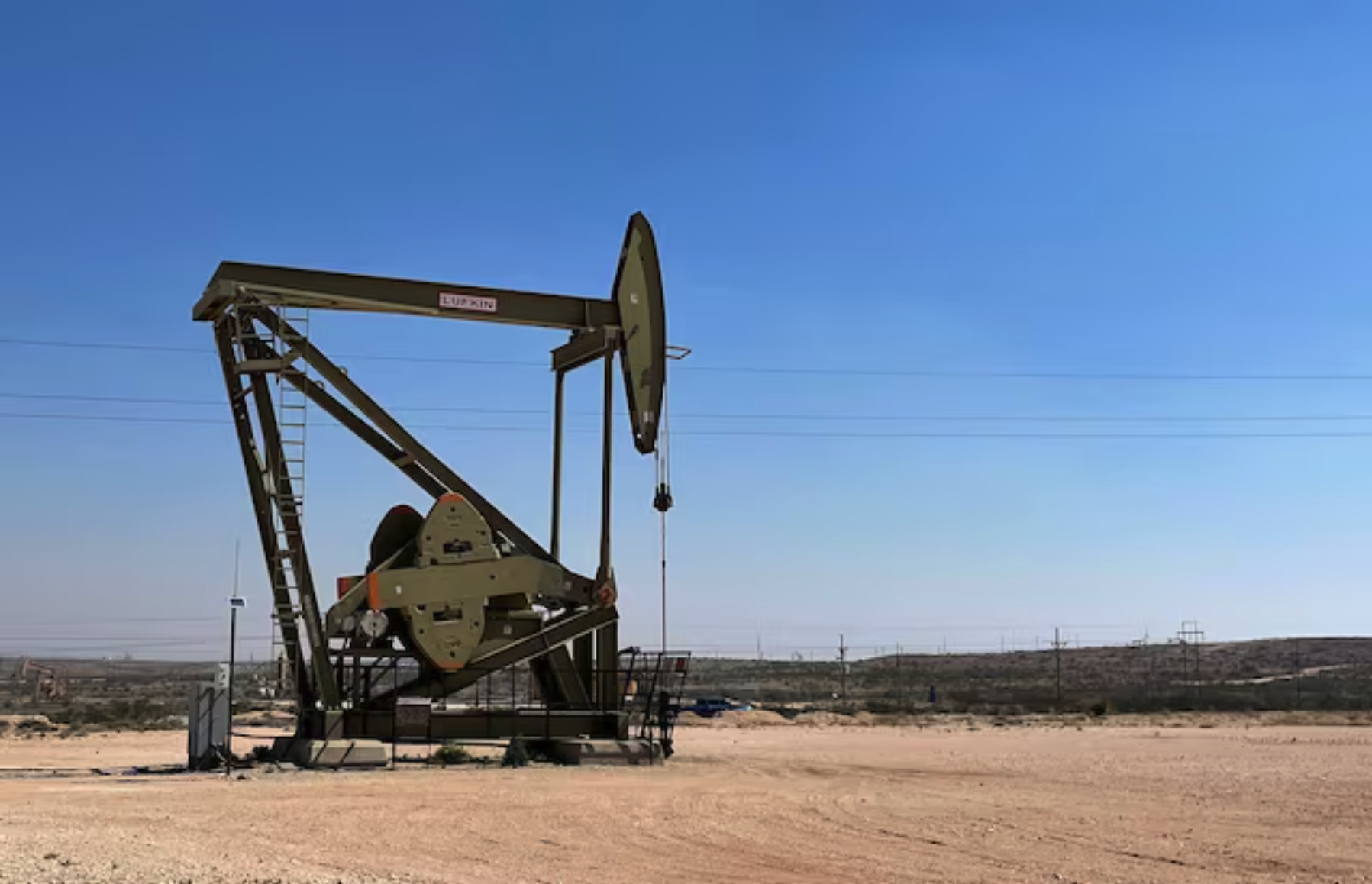
![Oil pumpjack working in an open green field with hills in the background under a cloudy sky.]()
Greenpeace's 2020 'Oil in the Cloud' was the first major mapping of cloud providers' role in fossil fuel digitalization.
-
![Silhouette of an oil pumpjack against a setting sun with a reddish-orange sky in the background.]()
Microsoft's 2019 partnership with ExxonMobil was announced as a tool to boost Permian production by up to 50,000 barrels per day.
-
![A field of blue solar panels under a clear blue sky.]()
Exxon subsidiary depends on Microsoft Azure to maximize oil extraction across thousands of new wells and build dozens of new facilities
-
![Nighttime view of Earth from space showing illuminated city lights across continents, with the Earth's curvature and stars visible in the background.]()
Halliburton and Microsoft collaborate for more efficient oil and gas production, bringing more fossil fuels to market
-
![Close-up of computer screen displaying colorful PHP and HTML code on a dark background.]()
Amazon Web Services (AWS) is helping oil and gas companies to enhance exploration and increase production
-
![Industrial factory with large metal structures, pipes, and staircases, situated on a grassy hill.]()
Google Cloud's partnership with Saudi Aramco includes services applied to oil and gas operations.
-
![Scenic view of a large lake surrounded by rolling hills and rugged mountains under a cloudy sky.]()
Chevron is leveraging Microsoft’s AI to improve extraction rates, increasing fossil fuels produced
-
![A man in a plaid blazer speaking in front of a large image of Earth projected on a screen.]()
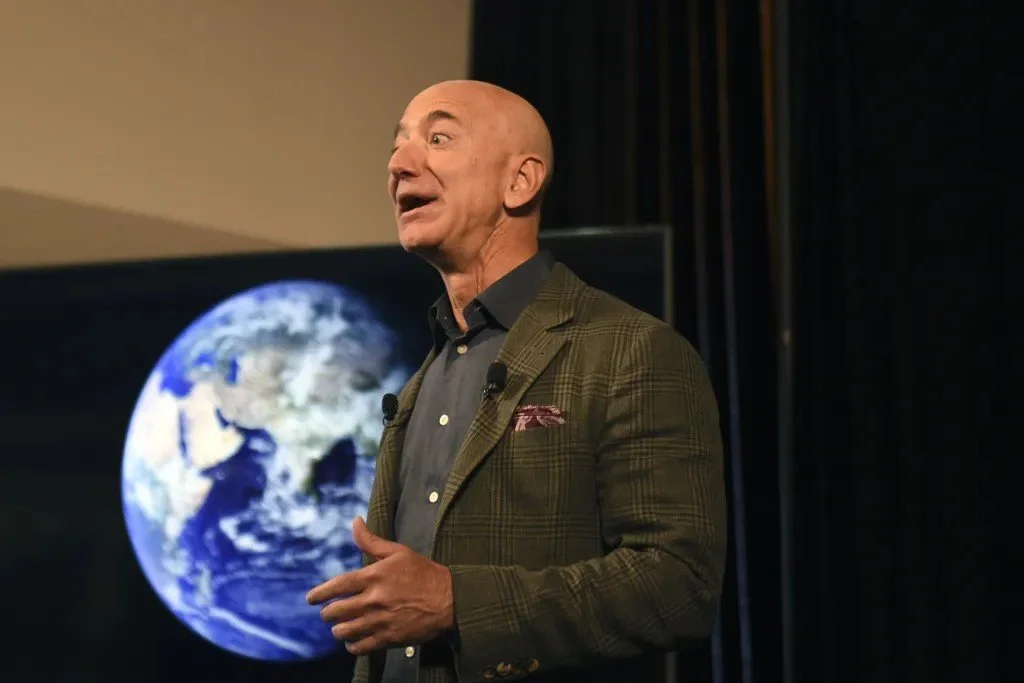
BP migrated its operations to AWS, citing efficiency gains across exploration and production.
-
![Black and white abstract sketch resembling an oil rig or industrial structure with scattered text and symbols in the background.]()
The digital drill: How big oil is using AI to speed up fossil fuel extraction
-
![Industrial oil refinery with multiple distillation towers emitting smoke, under dark, cloudy skies.]()
Amazon Web Services (AWS) could be making $9.6 billion annually from the oil and gas industry alone — about 10% of AWS revenue.
-
![Applying AI in oil and gas]()
92% of oil and gas companies are either currently investing in AI or plan to in the next two years.
-
![Screenshot of an article titled 'The digital drill: How big oil is using AI to speed up fossil fuel extraction' from Global Witness, published on 21 September 2023, with navigation links and social icons.]()
Some of the world’s richest oil and gas companies are using AI to accelerate fossil fuel extraction.
-
![]()
NVIDIA Promotes AI for Brazilian Oil and Gas on Eve of COP30
-
![]()
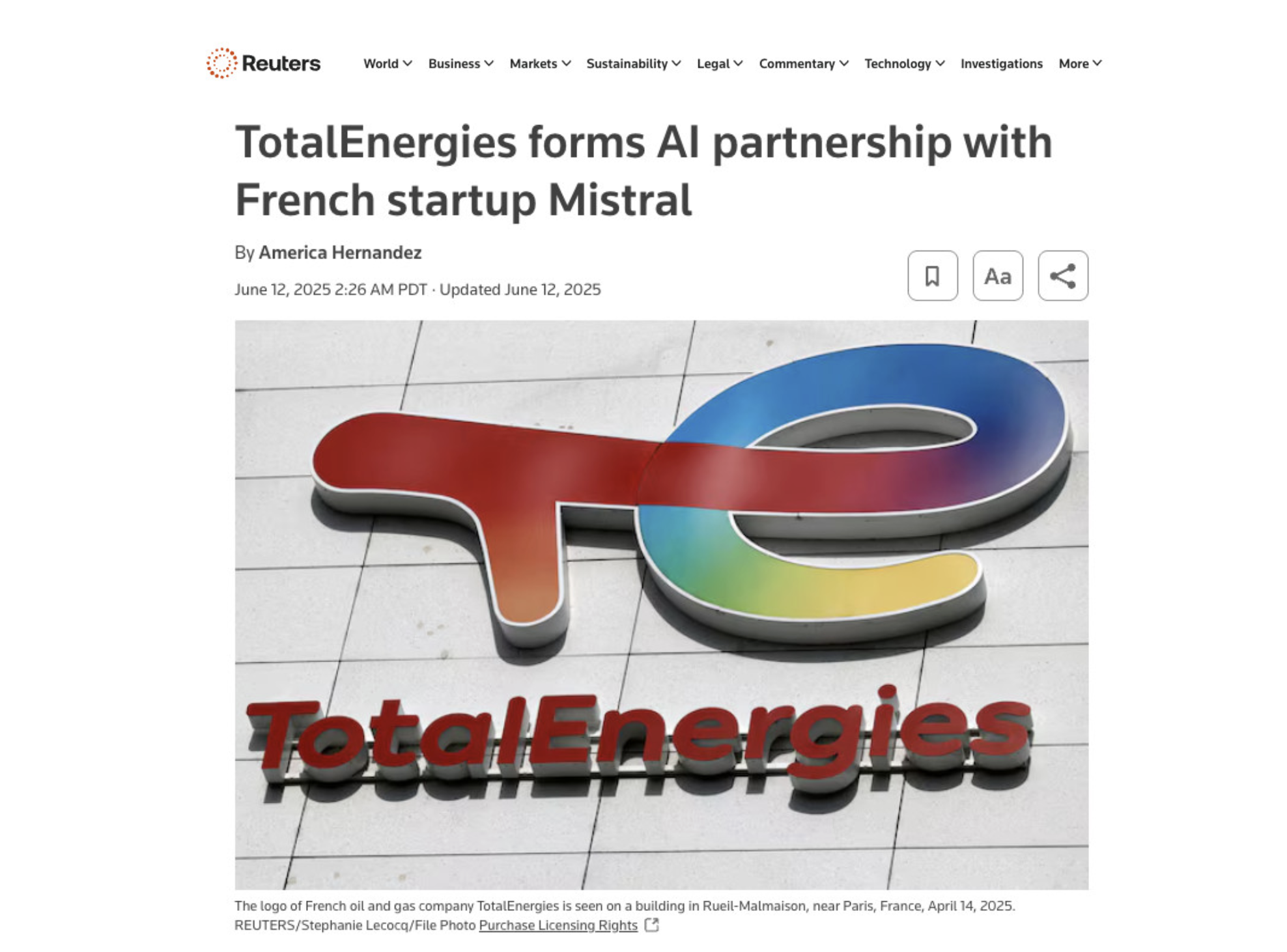
TotalEnergies forms AI partnership with French startup Mistral
-
![]()
One of Tech’s Cleanest Companies, Autodesk, Is Making Tools for Coal Mines and Oil Drills









We’re working to align technological progress with climate science
-

Research
Building the quantitative evidence base and identifying governance gaps
-

Advocacy
Advancing smart policies, market design, governance, and incentives
-

Mobilization
Building the cross-sector constituency this issue currently lacks
Our work
-
![]()
Paper: AI's fossil fuel applications outweigh its climate benefits
New peer-reviewed research finds that AI's fossil fuel applications enable more emissions than its renewable energy applications avoid, a net increase of 0.47 to 1.8 gigatonnes of CO₂ annually. Published in npj Climate Action, a Nature Portfolio journal.
-
![]()
AI built to tackle climate change. Deployed by the fossil fuel industry.
A former Microsoft product manager examines the role of AI in the energy sector — and the broader questions it raises about how technology companies choose to deploy their tools. -
![]()
Microsoft Shareholder Resolution on AI and Fossil Fuel Risks
Filed with As You Sow, the resolution called to transparently assess and disclose the risks of providing AI services for fossil fuel production. Will Alpine presented to Microsoft’s board, securing nearly 10% shareholder support at the 2024 AGM. -
![A stylized graphic of an oil drilling rig with a pixelated hand cursor, with the text 'The Atlantic' in the upper left corner on a red background.]()
When climate commitments and commercial contracts collide
The Atlantic on the tension between corporate climate commitments and AI services in fossil fuel production. -
![]()
I loved my job at Microsoft, but resigned on principle. Here’s why
Holly Alpine on the hard decision to leave Microsoft to focus on AI’s role in fossil fuel expansion. -
![]()
Time to quantify the real cost of the technology sector's fossil fuel enabling
Holly and Will’s Letter to the Editor in the Financial Times calling for greater transparency. -
![The word 'Grist' at the top with four colored squares below showing oil pumps and a person kicking the squares.]()
Inside the push to hold Microsoft to Its climate promises
Inside the multi-year employee effort to align Microsoft's AI services with its public climate commitments. -
![]()
We're wrong about AI
Three things Will got wrong working on AI and sustainability at Microsoft — and what he learned about why governance, not just better tools, is what closes the gap. -
![]()
SXSW London panel: truth-telling and accountability in tech
On what it takes to surface accountability concerns in eras of eroding institutional protections. -
![]()
Enabled Emissions Podcasts
Repository of podcasts with Holly and Will speaking about the Enabled Emissions topic -
![]()
AI Could Help Decarbonize the Grid. It’s Already Helping Find More Oil.
Two former Microsoft employees have turned their frustration into an awareness campaign to build climate-science aligned technology governance guardrails. -
![]()
How AI is reshaping fossil fuel production economics
From inside the tech sector: what we learned about AI and energy.





Leadership
Holly and Will Alpine are leaders in Responsible AI and sustainability with 14 years of combined experience at Microsoft. During a four-year internal advocacy effort, they mobilized thousands of colleagues, convened forums, engaged senior leadership, and authored influential memos—efforts that contributed to the launch of Microsoft’s Energy Principles. In 2024, recognizing the limits of internal advocacy and the need for systemic climate reform, they left to launch the Enabled Emissions Campaign and advance broader research and governance work across the sector.
-
Holly is a recognized sustainability leader with a decade of experience at Microsoft, where she founded and led both the company's global Community Environmental Sustainability program as well as the Employee Engagement program, supporting 10,000 employees across 36 global chapters. Holly is on the Board of Directors for American Forests and Zero Waste Washington and is an active plant-based mountain athlete.
-
Will is a product leader working at the intersection of technology, policy, and climate. At Microsoft, he led the development of Responsible AI platform features, co-founded Green Software Engineering initiatives like the open-source Carbon Aware SDK, and co-authored Microsoft’s Accelerating Sustainability with AI playbook. Outside of work, he finds inspiration in nature, exploring the rugged landscapes of the Pacific Northwest.
Endorsements
Our Allies










FAQ
-
Enabled emissions are the additional greenhouse gas emissions that occur when advanced technologies—like AI, IoT, and cloud computing—make fossil fuel extraction and production economically or technically feasible.
These emissions don’t appear in tech companies’ carbon footprints—but they’re real, and potentially massive.
-
Currently, none. No national or international policy currently regulates the use of AI, cloud, or IoT in high-carbon sectors like oil and gas.
-
It is related but separate. The biggest climate risk from AI isn’t its energy use—it’s how it’s used. While AI-driven demand is pushing data center electricity consumption higher (about 1.5% of global electricity in 2024, projected to reach nearly 3% by 2030), the emissions impact is still relatively small compared to fossil fuels, which drive over 90% of global CO₂ emissions. We are focused on how AI is used to expand fossil fuel production, locking in long-term emissions.
-
AI-driven gains in renewables and efficiency are real and important, but our modeling shows they're insufficient on their own to offset gains in fossil productivity. Both pathways need to be addressed together. As the IEA puts it, avoided emissions from digital technologies “are not on track to materialise without regulatory and other interventions.”
-
Only with guardrails. Jevons Paradox shows that improving efficiency can lead to increased overall resource use. Without regulation, tech-driven efficiency in oil and gas often leads to more drilling, not less.
-
Enabled emissions aren’t currently captured in corporate climate reports. Tech companies aren’t accountable for how their tools are used, and current Scope 3 rules don’t cover the downstream impacts of technology.
-
Policy wins are essential: for example, the EU AI Act could be expanded to classify fossil-fuel-enabling AI as “high risk.”
-
Yes, but most are vague or misleading. Without enforceable standards or interim targets, they’re “virtually meaningless” (Carbon Tracker, 2023). The IIGCC standard is promising—but voluntary.
-
The latest data of cloud market share by fossil fuel digitalization contracts shows: Microsoft (~57%) Amazon Web Services, (~17%) Google Cloud (~13%) Others (~13%).
Collaborate with Us
Join us as an ally, supporter, or partner
Support Us
Your support drives systemic change
Subscribe now
Sign up for infrequent campaign updates