New Peer-Reviewed Research: AI Increases Net Global Emissions
New peer-reviewed research published in npj Climate Action finds that AI increases net global emissions, driven by its fossil fuel applications outweighing its renewable energy benefits — an effect many times larger than the datacenter energy use that has dominated the AI-and-climate conversation.
A plain-language summary of findings published in npj Climate Action, a Nature Portfolio journal, which can be found at https://www.nature.com/articles/s44168-026-00411-0.
Headline Result
Conventional assessments of AI's climate impact focus on datacenter energy demand, AI-optimized renewables, and demand-side efficiency, but largely omit AI's significant effect on the economics of fossil fuel supply. This study models that pathway alongside renewables and demand-side effects within a single, unified framework, capturing their net effect rather than assessing each in isolation. The result: AI-driven productivity gains increase net global emissions by 0.47 to 1.8 gigatonnes of CO₂ annually (1.2–4.8 percent of 2024 global energy-related emissions), as AI's fossil fuel applications enable more emissions than its renewables applications avoid, even under parallel adoption. Isolated fossil fuel productivity gains alone generate emissions 3.3 to 13.3 times larger than today's datacenter emissions, and up to 8 times larger than projected 2035 datacenter emissions.
Key findings
AI increases net global emissions by 0.47 to 1.8 gigatonnes of CO₂ annually—as its fossil fuel applications enable more emissions than its renewable applications avoid.
AI's fossil fuel applications, considered in isolation, generate emissions 3.3 to 13.3 times larger than today's datacenter emissions, and up to 8 times larger than projected 2035 datacenter emissions.
For AI's climate benefits to outweigh its fossil fuel effects, renewables gains would need to be 4 to 5 times larger than fossil fuel gains.
Across every adoption scenario tested, net emissions fall only when AI's fossil fuel gains are zero.
AI-driven grid and energy efficiency improvements barely move the needle, cutting only about 0.1 gigatonnes of CO₂ a year, even under the most optimistic scenario.
A substantial carbon price narrows, but does not eliminate, the net increase.
AI-driven productivity is increasing emissions faster than economic output, the opposite of what's needed for sustainable growth.
What Are Enabled Emissions?
Enabled emissions are the additional greenhouse gas emissions that result when oil and gas companies use AI products to make fossil fuel production faster, cheaper, and more productive across the value chain, from extraction, to refining, to power generation.
Enabled Emissions vs. Datacenter Emissions
Datacenter emissions and enabled emissions are separate but coupled issues within the same fossil-intensive energy system. Datacenter emissions reflect AI's direct operational energy use. Enabled emissions come from what AI is used to do: applications that enhance the productivity of the fossil fuel supply that powers that same system.
Why It Matters
Current climate, ESG, and AI governance frameworks assess technology companies on their own operational emissions, not on how their products are used. A company can reduce its own emissions while its AI products simultaneously help expand global fossil fuel production. AI is widely promoted as a tool for decarbonization, but this study finds the opposite: on net, it reinforces fossil fuel incumbency rather than displacing it, and today's infrastructure and contracting decisions are locking in that capacity for decades.
Methodology
The study uses Purdue University's computable general equilibrium (CGE) model, GTAP-E-Power, representing AI adoption as productivity shocks across fossil fuel extraction, refining, and generation; renewables generation; and grid and demand-side efficiency pathways. Datacenter energy demand is shown for reference only and is not modeled within the equilibrium framework. Shock magnitudes are drawn from IEA analysis and other empirically grounded industry and academic sources, with results tested for robustness across elasticity, baseline, and carbon pricing assumptions.
Further Reading
Full paper: https://www.nature.com/articles/s44168-026-00411-0
Enabled Emissions Campaign | holly@enabledemissions.com
Press Coverage
-
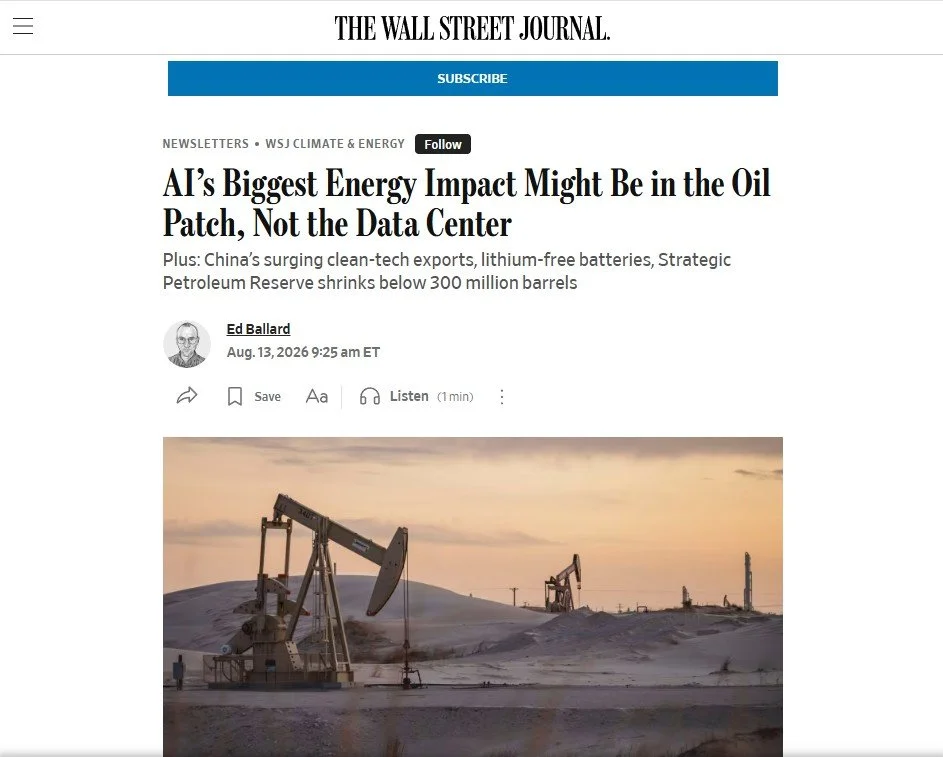
The Wall Street Journal
Ed Ballard
“AI’s Biggest Energy Impact Might Be in the Oil Patch, Not the Data Center” -
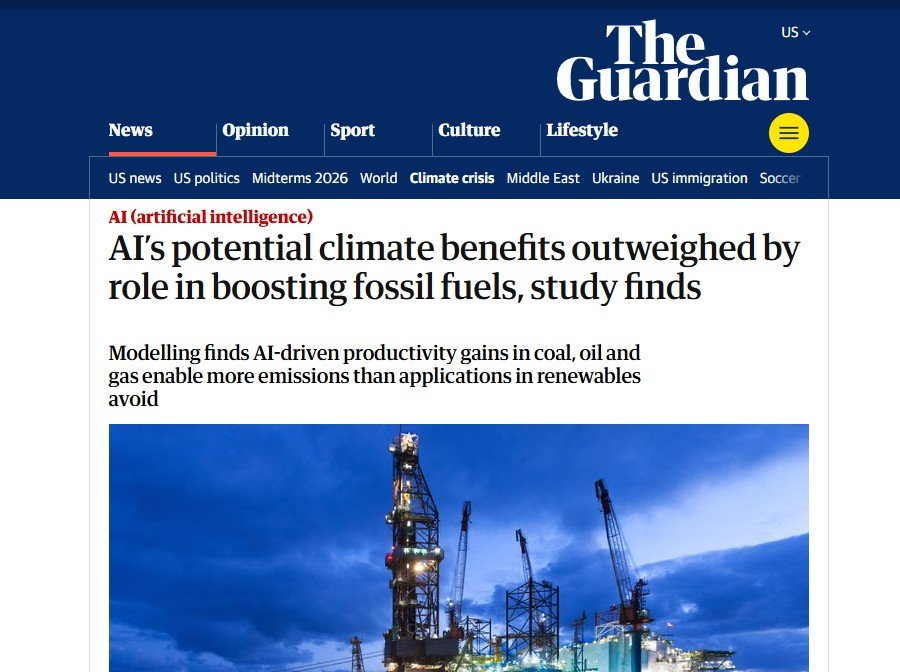
The Guardian
Ajit Niranjan
“AI’s potential climate benefits outweighed by role in boosting fossil fuels, study finds” -
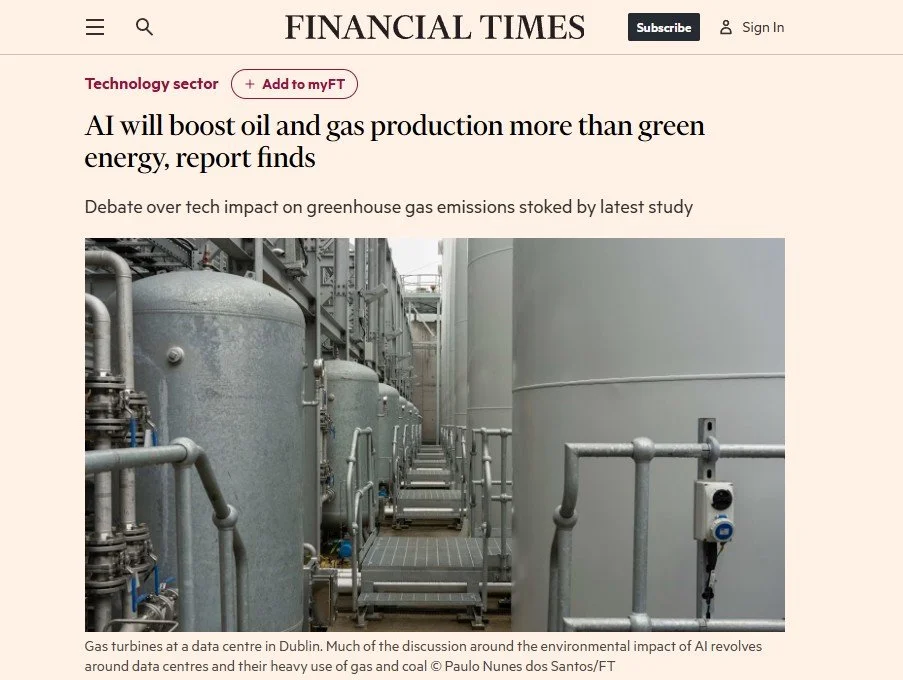
Financial Times
Martha Muir
“AI will boost oil and gas production more than green energy, report finds” -
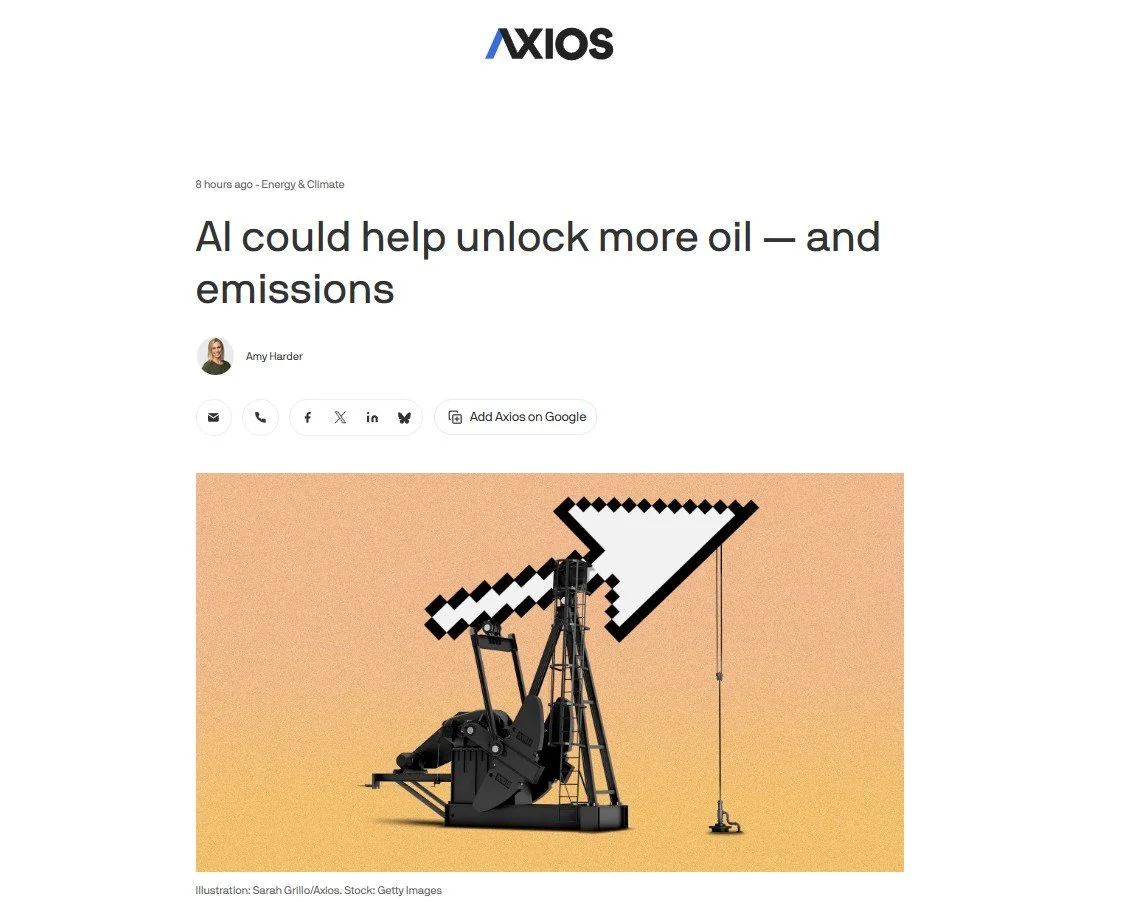
Axios
Amy Harder
“AI could help unlock more oil — and emissions” -
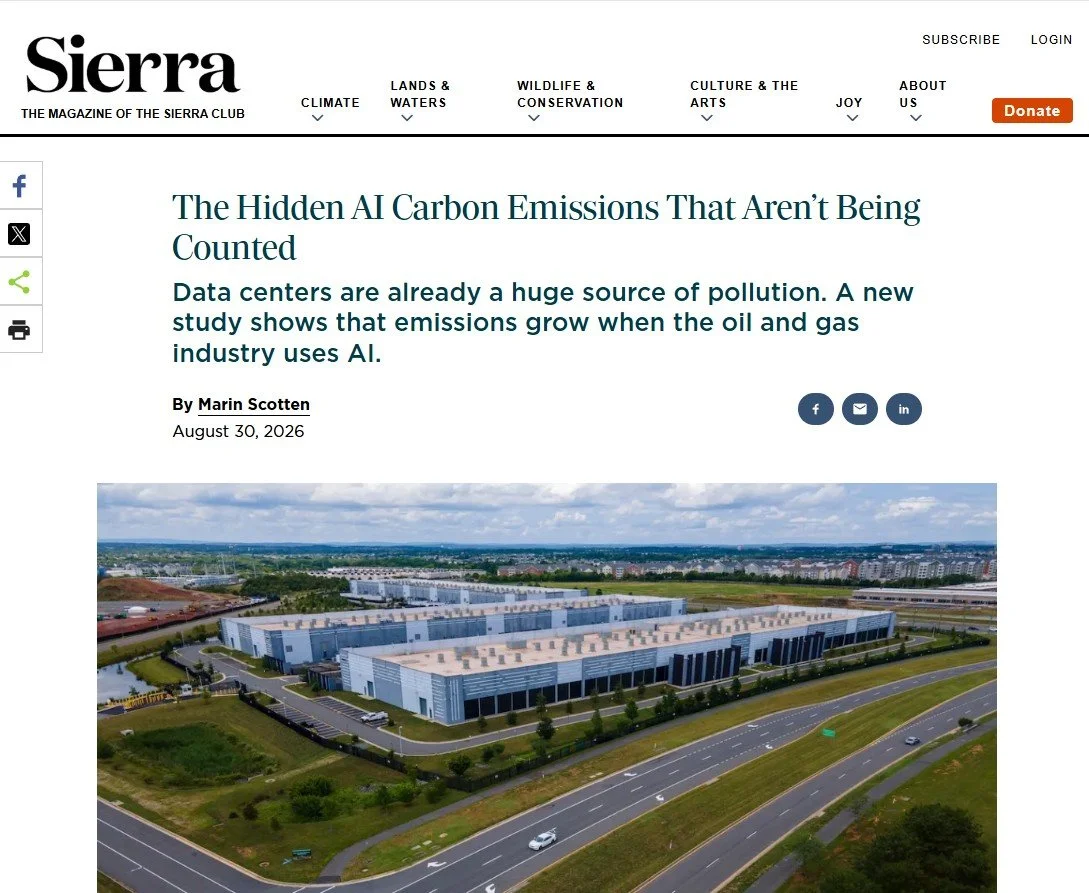
Sierra Club
Marin Scotten
“The Hidden AI Carbon Emissions That Aren’t Being Counted” -
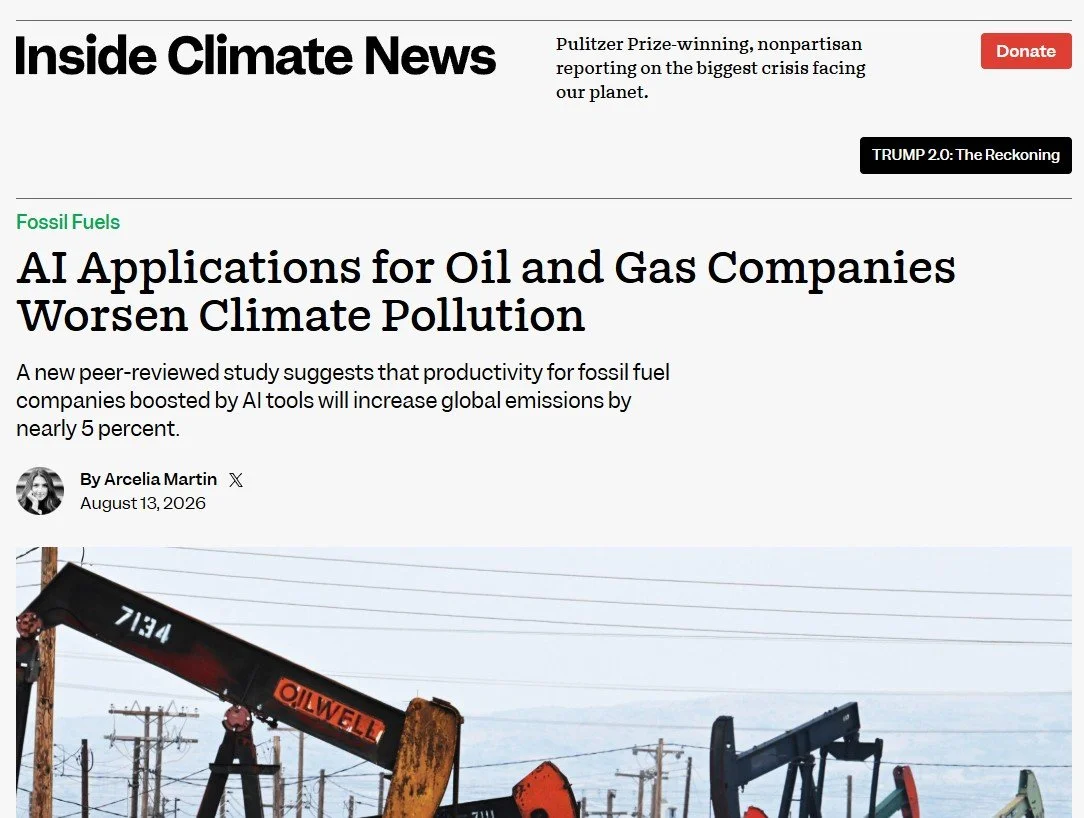
Inside Climate News
Arcelia Martin
“AI Applications for Oil and Gas Companies Worsen Climate Pollution” -
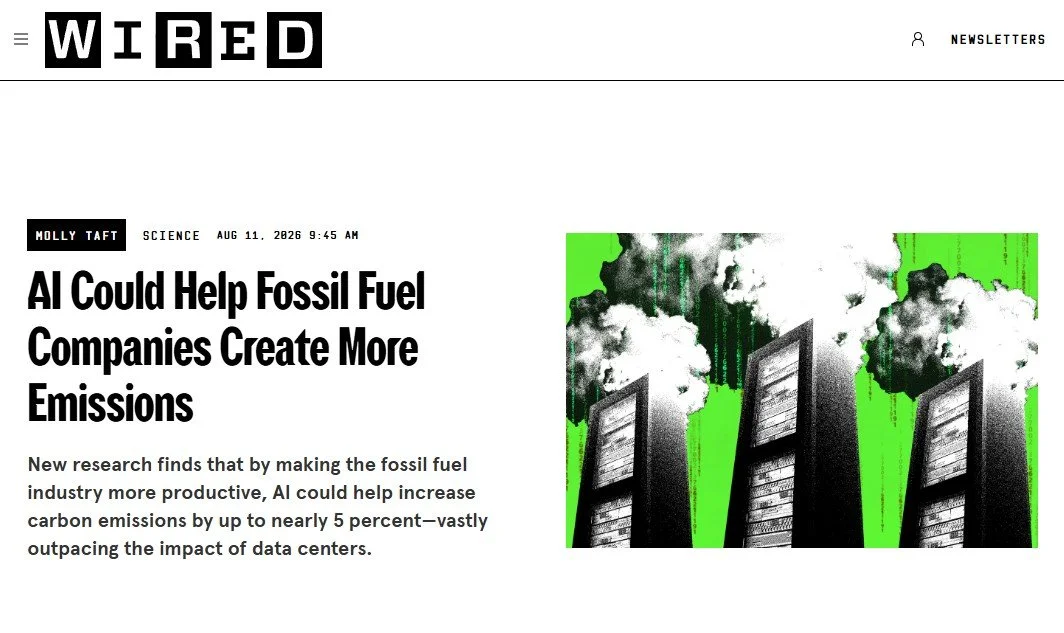
Wired
Molly Taft
“AI Could Help Fossil Fuel Companies Create More Emissions” -
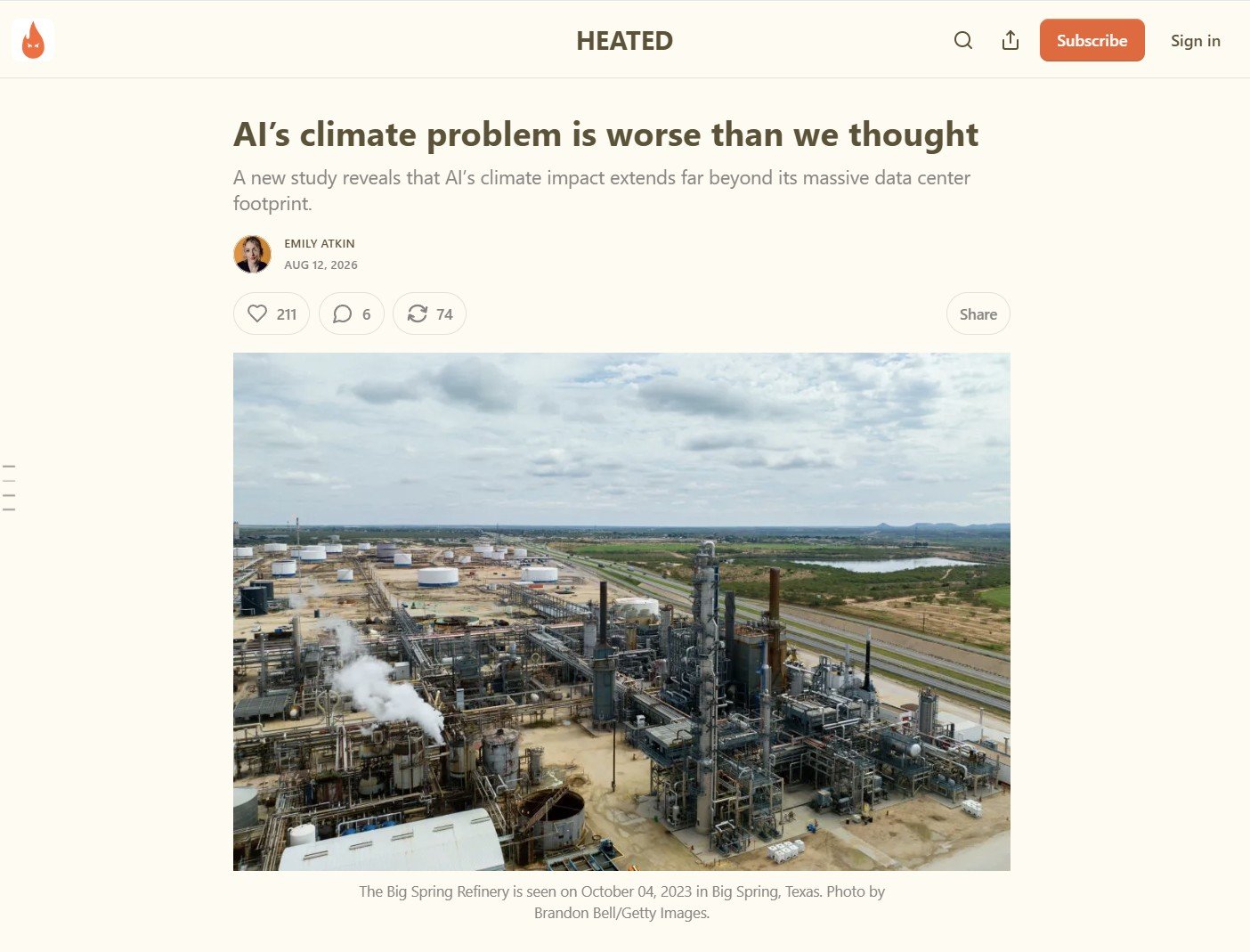
Heated
Emily Atkin
“AI’s climate problem is worse than we thought” -
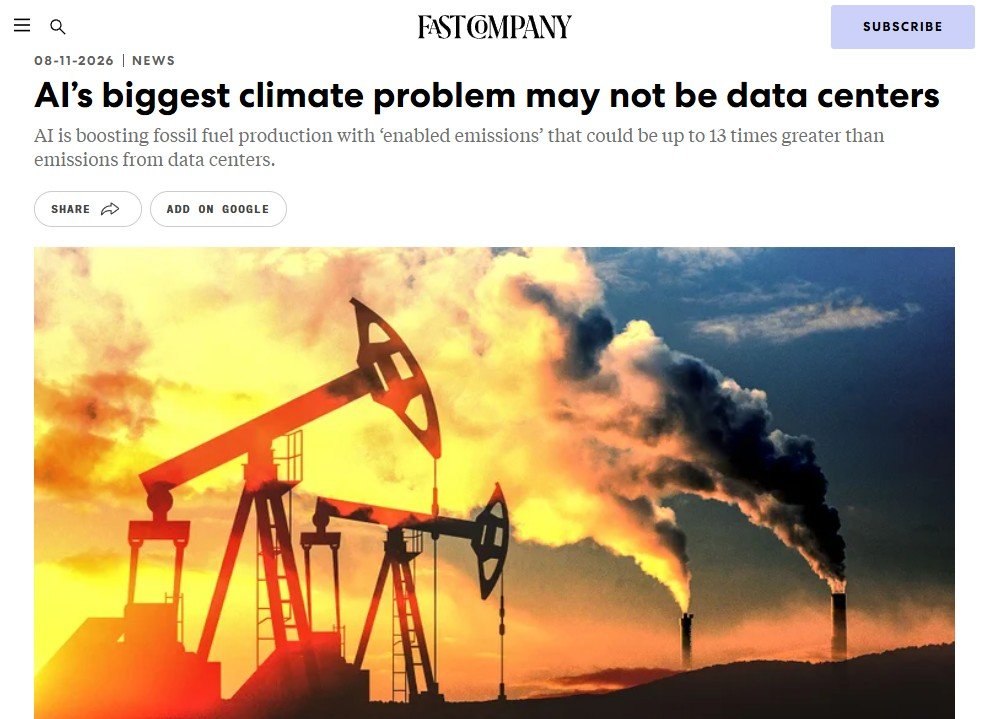
Fast Company
Adele Peters
“AI’s biggest climate problem may not be data centers” -
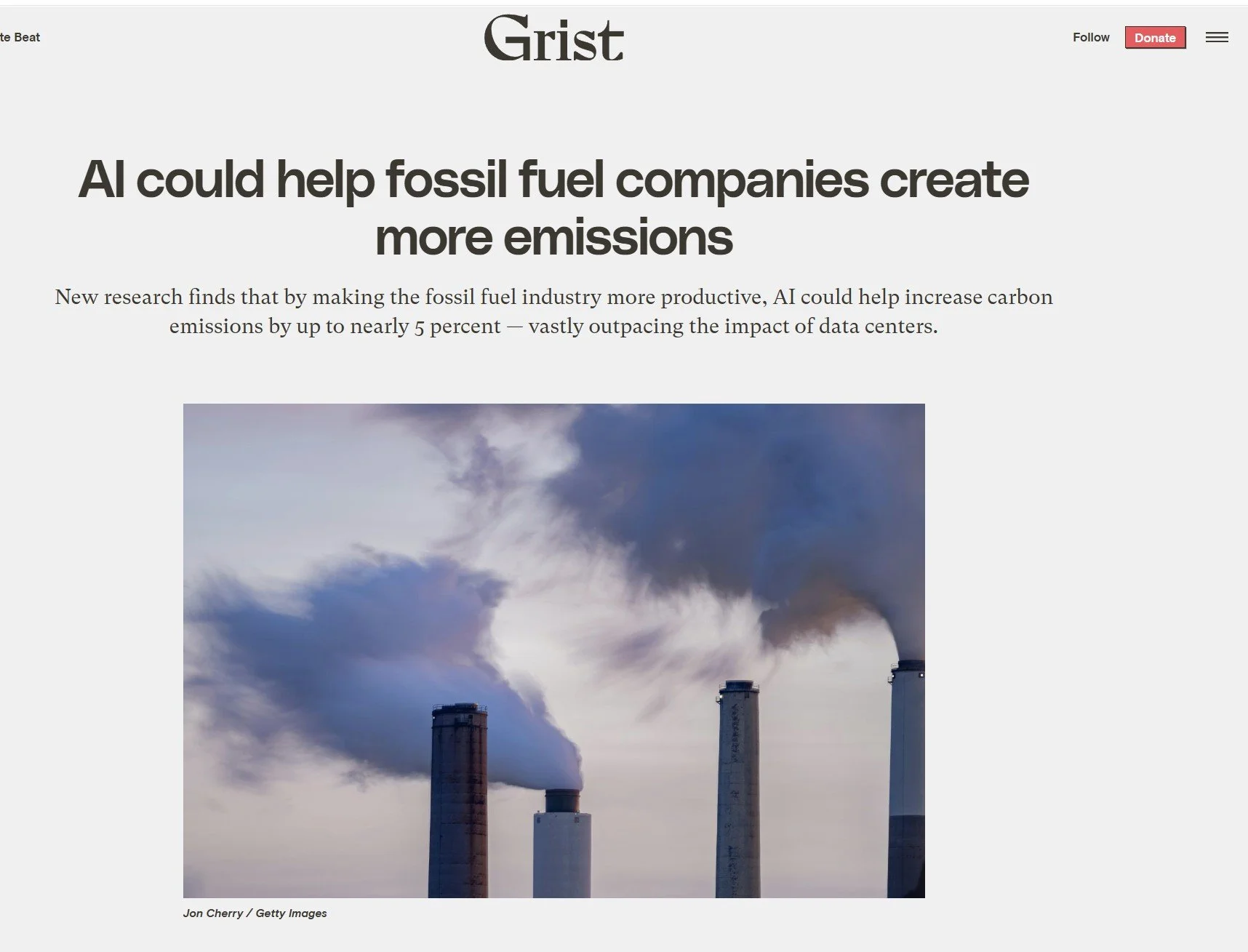
Grist
“AI could help fossil fuel companies create more emissions”
-
Public Citizen
“New Peer-Reviewed Study Finds that AI Boosts Fossil Fuels More than Renewables”
-
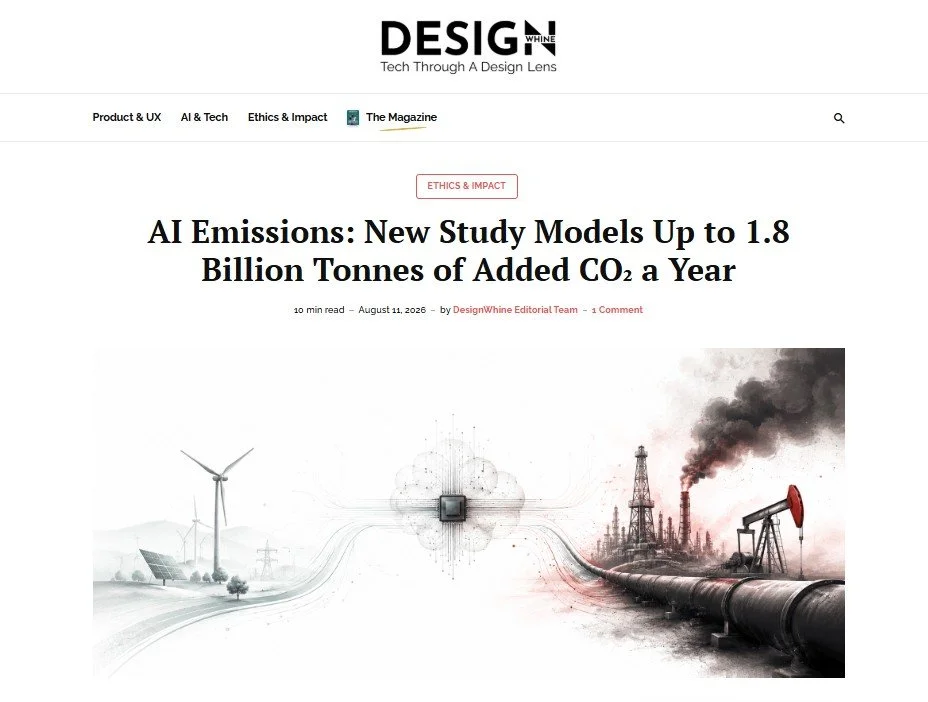
DesignWhine
DesignWhine Editorial Team
“AI Emissions: New Study Models Up to 1.8 Billion Tonnes of Added CO₂ a Year” -
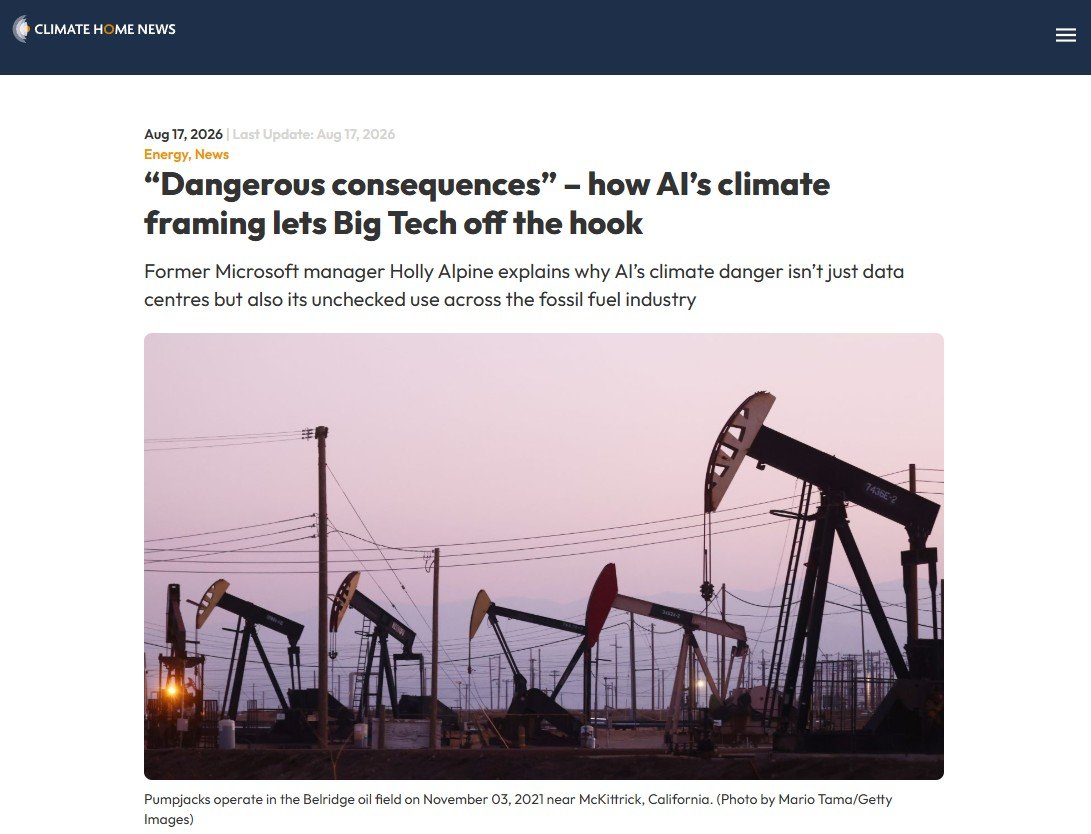
Climate Home News
Matteo Civillini
“‘Dangerous consequences’ – how AI’s climate framing lets Big Tech off the hook” -
AI Weekly
Alexis Dufresne
“AI May Add Up to 1.8 Gigatonnes of Emissions a Year, Study Finds” -
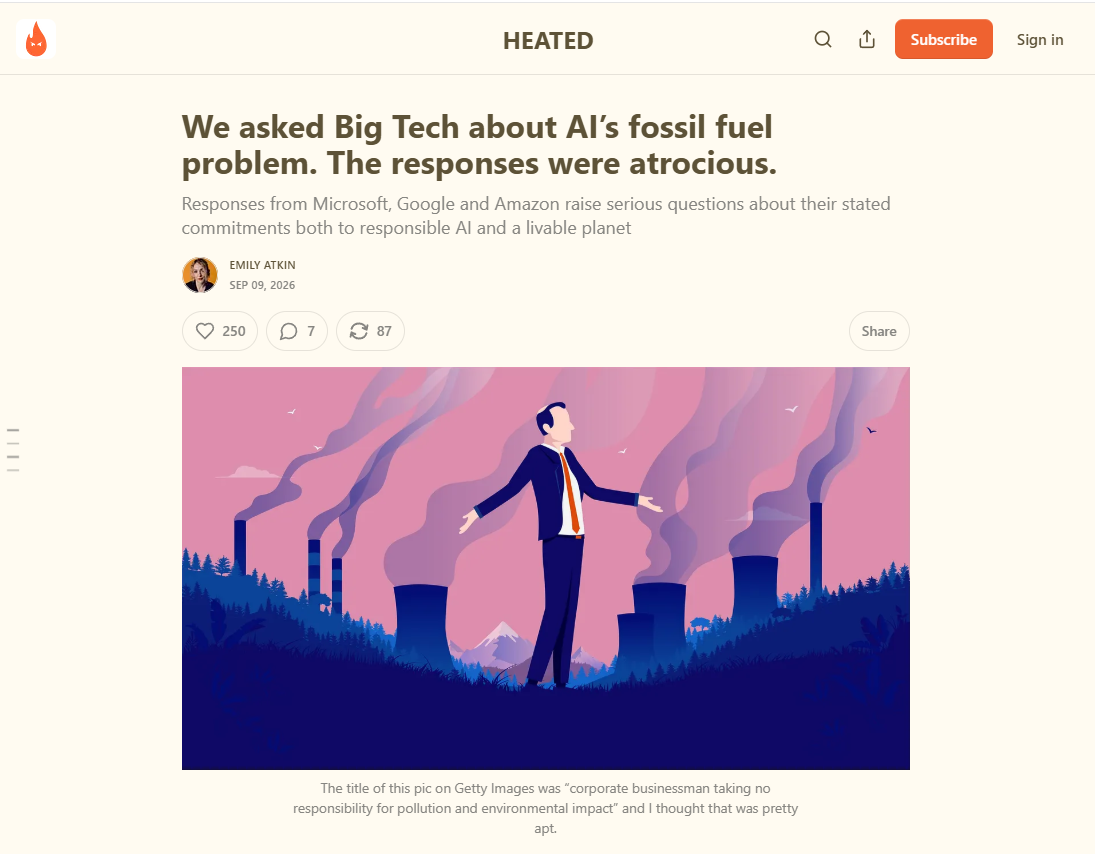
HEATED
Emily Atkin
”We asked Big Tech about AI’s fossil fuel problem. The responses were atrocious.” -
Greenpeace
Madison Carter
“Greenpeace USA responds to report showing that AI’s net impact is a disaster for global emissions” -
ReNews
Stephen Dunne
“AI renewables gains face fossil challenge”